What is happening? Why does each new generation believe that the previous one lived better? That the food was better, relationships were more open, the air was cleaner, there were fewer dangers, and the future was more secure. What is this? A trait of the human psyche or just tricks of the mind?
Undoubtedly, many achievements of human thought, which have become an integral part of our modern life, have made daily living easier, increased labor productivity, defeated many diseases, and provided answers to many questions. But why does all this not make humanity happier?
Where do constant financial and political crises come from? Why does the environment keep getting worse and now needs our ‘protection’? Why has so much weaponry of mass destruction been created—enough to wipe out humanity several times over? Where are entire species of plants and animals disappearing, one after another?
Our distant ancestors struggled for survival. And they were able to win this struggle thanks to their intelligence, collective efforts, of course, the role of chance, ‘right’ mutations, and a focus on the result—survival. Modern humans are not focused on survival, but on mere existence. In which direction are we evolving? Why is it that we no longer need to make collective efforts to survive? Why do we increasingly strive for individual success, just for ourselves?
Anyone who has taken even a slight interest in the history of the ancient world knows that in those distant times, when the question was who would become the head of the food chain, every member of the primitive community played some useful role. One would heal fellow tribesmen, another knew how to find game, a third was excellent at killing wild animals during the hunt. Some grew or gathered useful herbs, others raised and educated children. Consequently, the hard-earned food was distributed according to each person’s contribution to the group’s survival.
Shelter and protection were also shared by all. It’s hard to imagine that anyone who was of no use to the tribe could survive in those distant times. He would simply die of hunger or disease. The one who led the group was the one on whom the group’s SURVIVAL depended. Exactly so, with a capital letter. A person lacking qualities outstanding to the group—strength, knowledge, intuition, responsibility for fellow tribesmen—could not become the leader. A person whose traits matched the group’s expectations of a leader. A person who helped the group achieve its goals, namely, to survive. In other words, the leader was the one whom the group considered the most suitable for achieving its goals. But what do we see today? Who is at the helm? Who can say that our current ‘leaders’ are the best among us? What goal do they help us achieve?
If previously group efforts benefited the whole group, including the leader, today group efforts primarily bring dividends to the leaders and only then to the group. The current system of state governance has turned everything upside down. Now it’s not the leader who helps the group achieve its goals, but the group (the people) who help the leader accomplish their personal goals. Doesn’t that seem a bit unfair to you? Imagine such a situation in ancient times—would we have survived as a species?
So what is happening? Why does the model declared by democratic principles not work? Why, in words, do the people control their own lives, but in reality, it’s the other way around? Why has the government management institution turned into a system where a minority exerts power over the majority? Why do even the world’s richest and most successful countries, not to mention the rest, face problems and failures, condemning their populations to uncertainty about the future and depression?
In my opinion, there are three global mistakes that humanity has made on its path of development. They have led us to the state we are in today.
The first
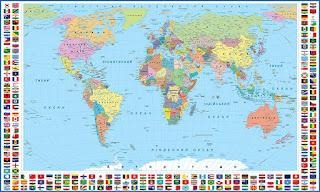
Artificial division of territories along national, religious, and other lines. The existence of borders only increases fragmentation and allows individual countries to implement almost opposite models of governance and life. Let’s think about where this division came from and what it gives us now.
I can assume that the existence of borders and the division into territories were necessary in times when the area and inviolability of land determined the food reserves that covered the long-term needs of a specific tribe. Since in those distant times people lived off what wild nature provided, the wider the territory a tribe controlled, the greater its chances of survival, especially during years of famine. If the territory became depleted, the tribe sought new lands or perished. This explains the migration of primitive tribes from depleted territories to others in search of richer food resources and the settlement in areas that supplied enough or even surplus food.
Those who remained sedentary in certain territories began to develop them: raising livestock, growing grains, and building dwellings. History has shown that, in terms of evolution, sedentary tribes prevailed over nomads. Humans started managing the process of food production and ceased to depend as much on wild nature as they had before.
Of course, in some territories it is better to raise livestock, in others to grow grains, somewhere to extract minerals, and elsewhere to develop tourism and recreation, but borders do not help develop this potential, they only create additional restrictions and difficulties.
Later, history showed that the originally necessary division into separate territories for survival led to the formation of sovereign governmental entities that still exist today.
Let’s think about it: why do we still need the division into states in the modern world, and who benefits from it? What do these borders protect today? We no longer roam the fields in search of food; with an effective and rational approach, modern agriculture could very well provide enough food for everyone.
We’ve already faced food overproduction crises. It’s no secret that the European government subsidizes its agriculture with the aim of reducing, not increasing, yields. Meanwhile, there are countries where people go hungry. So, what exactly do borders protect?
For ordinary people, borders are nothing but restrictions and inconveniences. For our leaders, they provide the opportunity to exploit the population within each territory according to their own rules.
What would happen if one fine day all borders disappeared? What’s so bad about people being able to move freely around the Earth? What’s so bad about goods moving freely, conquering new markets not through subsidies and restrictions, but through their own competitive advantages?
Who would suffer if enterprises incapable of producing at a modern level shut down, unable to stand up to competition, thereby freeing up resources and space for new, more efficient productions? Who would be worse off from the free migration of labor resources?
The invisible hand of the market will put everything in its place, just don’t interfere with it. Market laws operate with ever-increasing efficiency and rationality. Don’t get in their way. Attempts to remove border restrictions happen constantly. But so far, there is no comprehensive solution. And while in the past, borders allowed our ancestors to survive, now they serve as a brake on the development of humanity.

The second
The focus on monetary profit. I was once struck by the simplicity and clarity of the following definition of profit: “Profit is what the owner underpays the worker for the value they created,” that is, profit is inherently unfair to the worker. Any activity aimed at obtaining profit at the expense of others’ labor is, by definition, unjust. Indeed, if the owner paid the worker exactly as much as they had produced, there would be no profit left.
However, this is not the case. Let us turn to history once again. We survived as a species because, in those times of constant struggle, we created the necessary and sufficient conditions for survival. There was no need to kill more game than was necessary, no need to build more huts than there were families in the tribe, and so on. What is happening now? A substitution of values has occurred. Previously, we regarded as valuable only that which helped us survive.
Today, we see profit expressed in money as a value. Money itself, as a universal equivalent, has long ceased to have a clear match in real assets and increasingly turns into mere paper, which we continue to use out of habit and hopelessness. The drive to maximize profit in monetary terms has led to a substitution of concepts.
We have stopped fighting for survival and have come to view the size of our bank account as a guarantee against all mishaps. The ability to manipulate the rules of money circulation has resulted in money itself becoming a commodity that is bought and sold. In addition, a sea of instruments has been created to increase the money supply without increasing the real backing of this mass with assets.
If in the past you could be confident in tomorrow and your family’s safety by being in a solid house with sufficient supplies and surrounded by reliable neighbors, now you need to stock up on money. I am sure that, by developing barter in due time, humanity could have found a universal, fair, and applicable model of exchange for the modern world. For example, exchange the results of your work and take what you need, created by others.
Money has created convenience but led to total dependence on NOTHING.
Third
The minority has come to rule the majority. Just think about it: a handful of officials tells us what to do, takes most of what we earn, and spends these resources to create more restrictions and difficulties for us. They try to manage the economy, invented POLITICS as a means of manipulating us. What does the state do as an institution? It maintains an army to defend its territories. From whom? From the armies of similar governments in other countries. How does it maintain this? At the expense of resources taken from us, resources which we could otherwise invest in developing our own businesses, improving our quality of life, and supporting our children’s development. What else does our state do?
It maintains fiscal and regulatory bodies. Why? So that they can take away from us the values we have created and the state can use them for its own, not our, purposes. They do not help me in any way. Do they help you? The state enforces the laws. Sounds nice. But in reality? Who are the most corrupt class—judges and prosecutors, regardless of the country. Sooner or later, they all make deals with their conscience. And if you think about which laws they are upholding, it becomes clear that the legal framework is nothing more than yet another tool adopted by the minority to manipulate the majority.
Who is ‘better off’ than everyone else in today’s world? Is it those who work selflessly, remember spirituality and conscience, or those who see themselves as the leaders of the modern world—our rulers, officials? No one will ever come up with anything more comprehensive and understandable than the 10 commandments in the Bible, 12 in the Quran, and 613 in the Torah. Humanity has created a model in which the very foundations are lost. What are modern leaders for, what should they do, what is their purpose?
Remember—leaders are those who help the people achieve their goals. In the past, that goal was to survive. Now, it might be to improve quality of life and promote development. Ask yourself this question and try to answer honestly. Does your current government help you improve your quality of life, encourage the growth of your business, help you feel secure about tomorrow, and instill confidence in your safety? Of course, this varies from country to country, but I am more than certain that only a few will answer all these questions affirmatively.
The less the government regulates the economy and imposes restrictions, the better and more confident people feel; the more the government tries to manage the economy and ‘protect’ its market, the fewer people are satisfied with their lives.
Who comes to power? Don’t you think that these people are just short-termers? For a while, they fight to get a ‘sweet’ position, some of them succeed and then start thinking about how to stay there. Accordingly, they avoid making decisions that they consider unpopular, and do not change the system that brought them to the top. What can they do for us? Our goals are not their goals. We want to live better, but they want to hold on to their positions. We want to improve the quality of life for society, but they only want to improve their own personal lives.
What long-term infrastructure projects are they capable of initiating and realizing? None. In the first year, they form their team, in the second and third they try not to get into trouble, and in the fourth, they think about re-election or reappointment. How can we expect that they will suddenly be concerned with the people’s goals? None of them has initiated a nationwide referendum with the aim of defining and agreeing on the goals that society considers most urgent and desirable for itself. To digitize them. And then to evaluate the government’s performance solely in terms of progress toward these main objectives. Nothing of the sort has happened.
What are we, the whole world, fighting against? What are huge resources being spent on? We are fighting corruption. But is the concept of corruption even relevant if there are no officials? So, are we spending time and resources on a state institution fighting its own creation? In other words, fighting itself. Something tells me that such a fight is doomed to fail.
There are few examples of someone cutting off their own hand or leg, or ripping out their heart or liver. Until we have the ability to choose leaders capable of helping achieve society’s goals, nothing will work. So, what is stopping us?
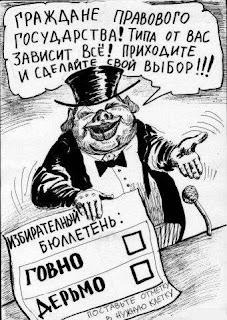
The existing election procedure, which ultimately allows us to choose not a leader—that is, not someone who is empowered and bears responsibility and has exceptional skills and personal qualities—but instead the most brazen populist, who raised the most money for their show, managed to tell the most fairy tales and make promises they never intended to keep, visited the most regions and appeared on TV more often. What’s wrong with us? Do we really believe a brazen, smooth-talking populist can lead our society to prosperity?
In my view, society should define its goals and hold a competition of projects proposed by candidates, evaluating the feasibility and alignment with the original objectives. As a result, select not a party leader, but the person who, according to society’s assessment, can best achieve the goals set by society. Think about it. Today, it is not us telling our government what we want or why we elect them, but they deciding for us where they plan to take us.
If all goals are formulated with quantitative indicators and deadlines, it’s very easy to evaluate the effectiveness of the current government. No results—out they go; we need to find those who can not only make beautiful promises, but also work effectively. What is the problem with collecting and considering the real opinion of society, not through parliamentary representatives? Modern technologies make this elementary. It’s just that our opinion interests no one. But should we pay for and maintain those who are not striving to achieve our goals, who are not intending to take our opinion into account, who, upon gaining power, see themselves as the ultimate authority, even though sometimes they can’t even clearly articulate their thoughts?
And what is the result:
We have created and maintain divisions of territories, which slows our development and worsens our quality of life.
We have set, as our priority goal, the accumulation of pieces of paper that have no real value.
We have created a model of government that is incapable of leading us to our goals and does not take our opinions into account. At the same time, it consumes vast resources just to maintain its own meaningless existence. Where will it take us?
Isn’t it time to start thinking about change?
Isn’t it time to start building a new model of society?
© Sergey Filinin
04.2013